Listen While You Work
Play this study as you work, drive, or rest. A simple way to keep the Word with you throughout your day, not only as a full sit-down study.
🎧 Listen to this study
Please note: this study is narrated with AI-generated audio, which may occasionally misread a Scripture reference (for example, "Acts 1 point 9" rather than "Acts 1 verse 9"). For the exact wording, please refer to your Bible.
Custom · The New Testament World
The Tomb, the Spices, and the Morning It Was Empty
The women rose before dawn and walked to a grave, carrying spices for a dead body, worrying about a stone too heavy to move. To feel the wonder of what they found, you have to know how the dead were buried, and why an empty tomb changed the world.
Before You Read
Burial usually happened the same day, before sunset, in the warm climate of the land.
The body was washed and wound in linen with myrrh and aloes, not embalmed as in Egypt.
Often a cave or rock-cut tomb, sealed with a large stone rolled across the entrance.
Grief was public and loud, with weeping, torn garments, and even hired mourners and flute players.
Dead four days, past all hope, raised while still bound in his graveclothes (John 11).
The empty tomb, the grave clothes left behind, and "I am the resurrection, and the life."
Step Into the Moment
Who Will Roll Away the Stone?
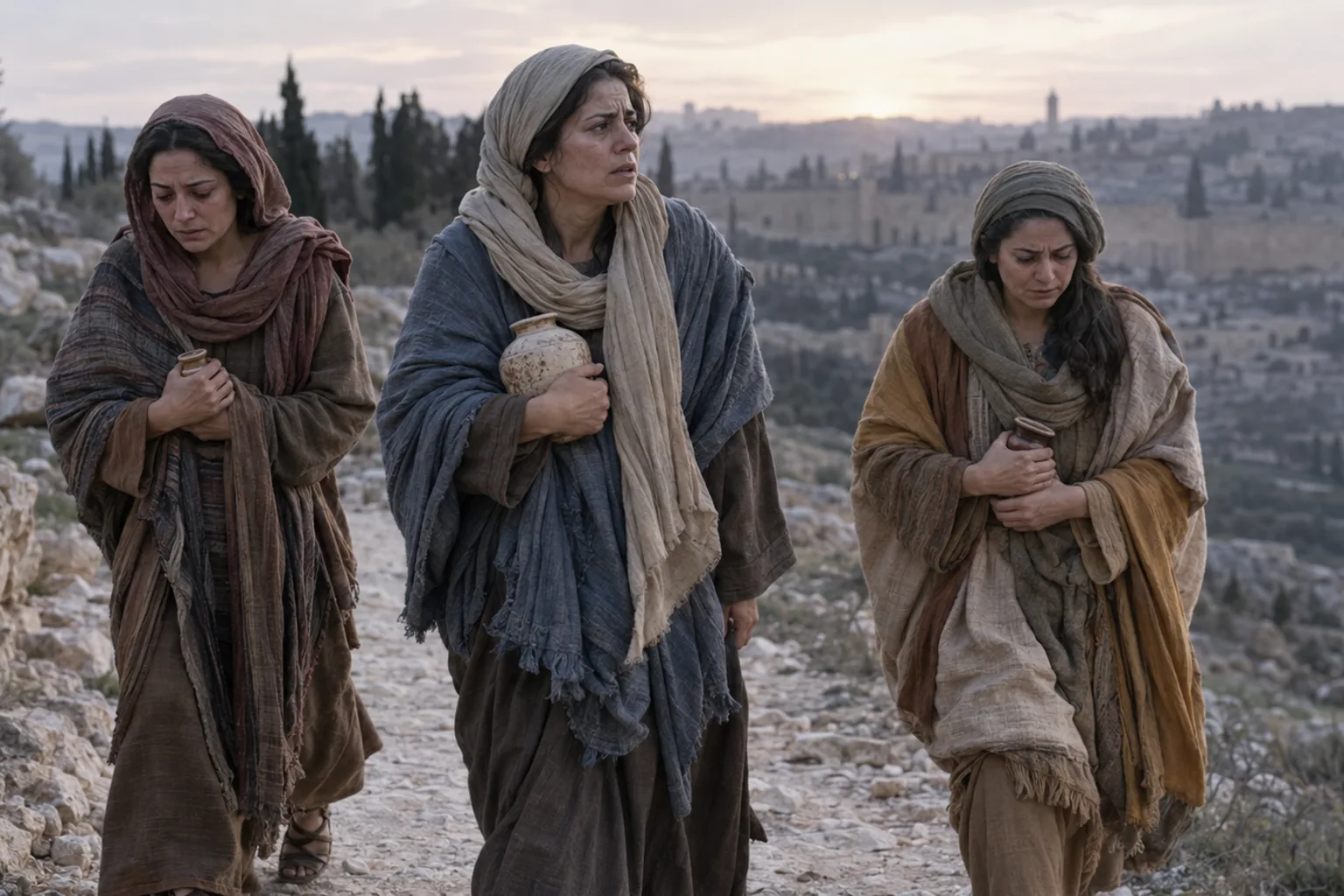
It was still dark when they set out, a small group of women with jars of spices in their arms. They had watched Him die, and watched where they laid Him, and now they came to finish the burial the Sabbath had interrupted, to anoint the body of the One they loved. As they walked the quiet road, one worry hung over them, spoken aloud: who would roll away the stone? It was far too heavy for them, and it was sealed. They had no answer. They only knew they had to come. And then they looked up, and the great stone was already moved, and the tomb was open, and empty.
To understand their terror and then their joy, we have to walk back through how the dead were treated, the spices in their arms, the linen on the body, the stone at the door. Every detail makes the empty tomb louder.
Cultural Background
How the Dead Were Buried
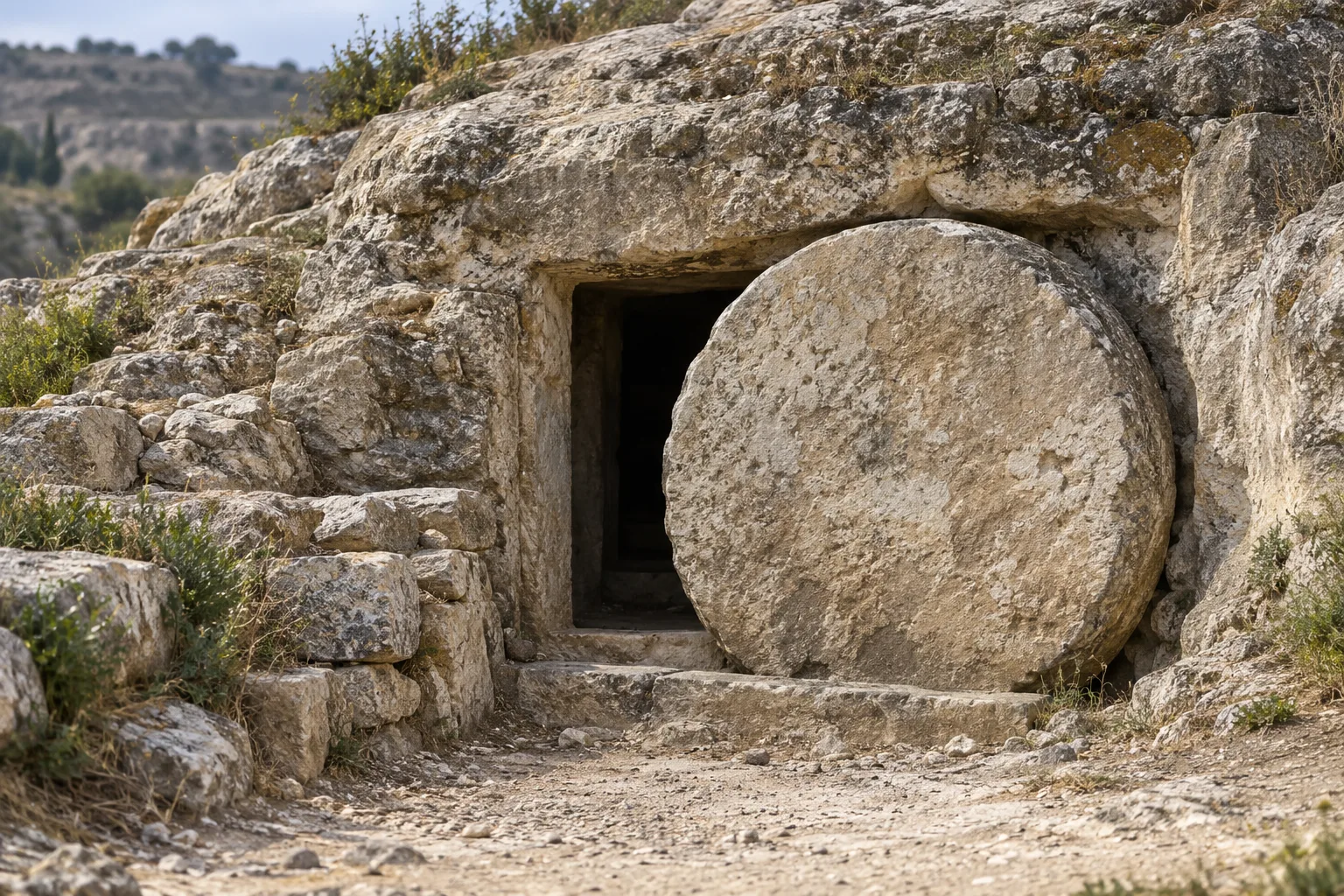
In the land of the Bible, burial came quickly, usually the same day the person died and always before nightfall. The body was washed with care, then wound in strips and sheets of linen, and fragrant spices, especially myrrh and aloes, were laid in among the wrappings. A separate cloth, a napkin, was placed over the face. This was not the embalming of the Egyptians, who preserved the body for centuries; it was a loving preparation for burial, and the spices honored the dead and softened the smell of decay.
The body was then laid in a tomb, often a cave or a chamber cut into soft rock, with a ledge or niche for the body inside. A large, heavy stone was rolled across the entrance to seal it. And the grief was anything but quiet. Mourning was loud and public, with weeping and wailing, torn garments, and often hired mourners and flute players, "the minstrels and the people making a noise" (Matthew 9:23). Death was met head-on, out loud, in the open.
The Burial of Jesus
A Hundred Pounds of Spices
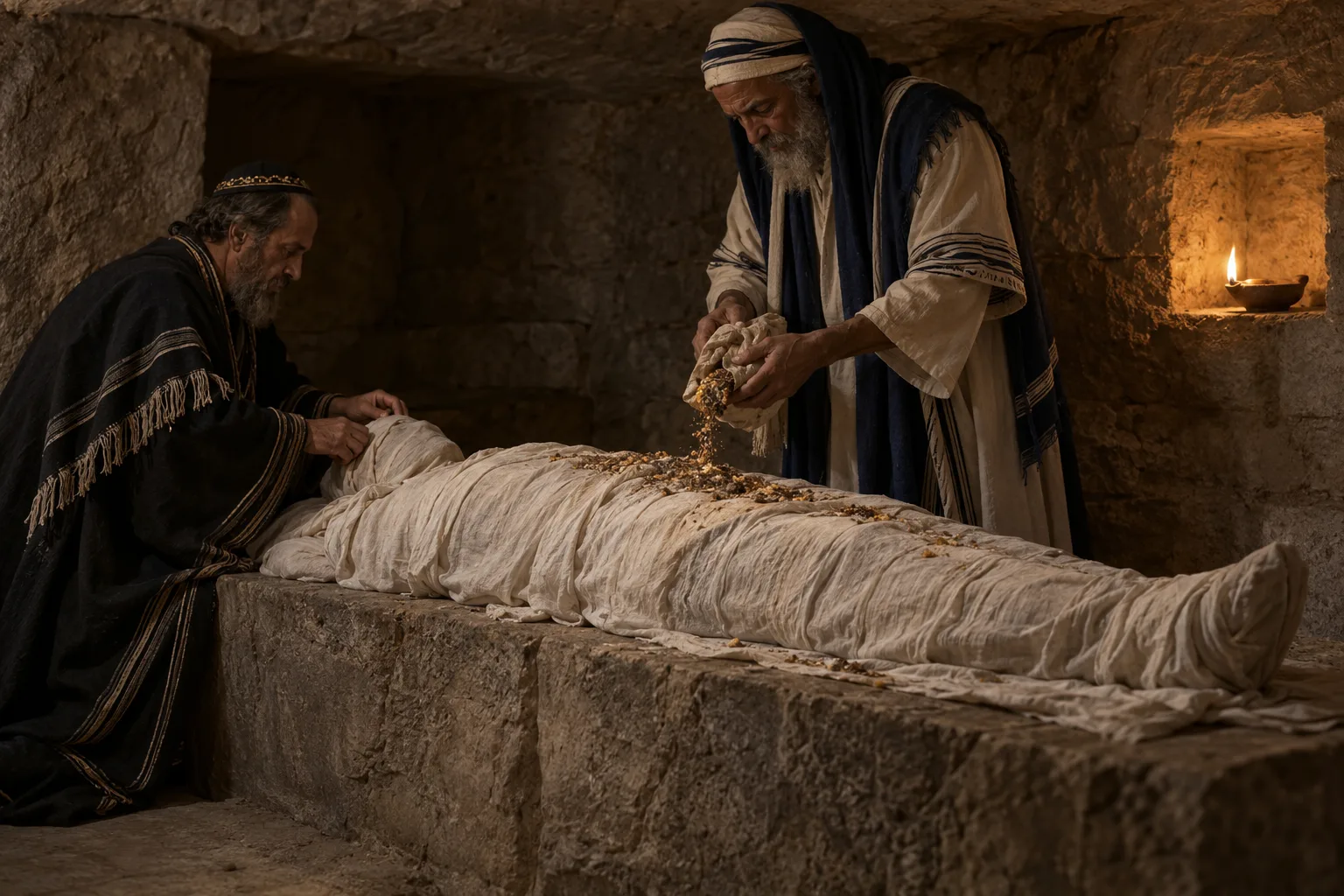
When Jesus died, two secret disciples stepped into the light to bury Him with honor. Joseph of Arimathea gave his own new tomb, and Nicodemus brought an astonishing quantity of spices:
"And there came also Nicodemus... and brought a mixture of myrrh and aloes, about an hundred pound weight. Then took they the body of Jesus, and wound it in linen clothes with the spices, as the manner of the Jews is to bury."John 19:39–40 KJV
A hundred pounds of myrrh and aloes is a burial fit for a king, a lavish, extravagant honor. They laid Him in the new tomb, rolled the great stone across the door (Matthew 27:60), and the women watched where He was laid. Everyone was certain of one thing: this was final. Bodies wound in linen and sealed behind stones do not come back.
Four Days Too Late
The Man Who Came Out Still Bound
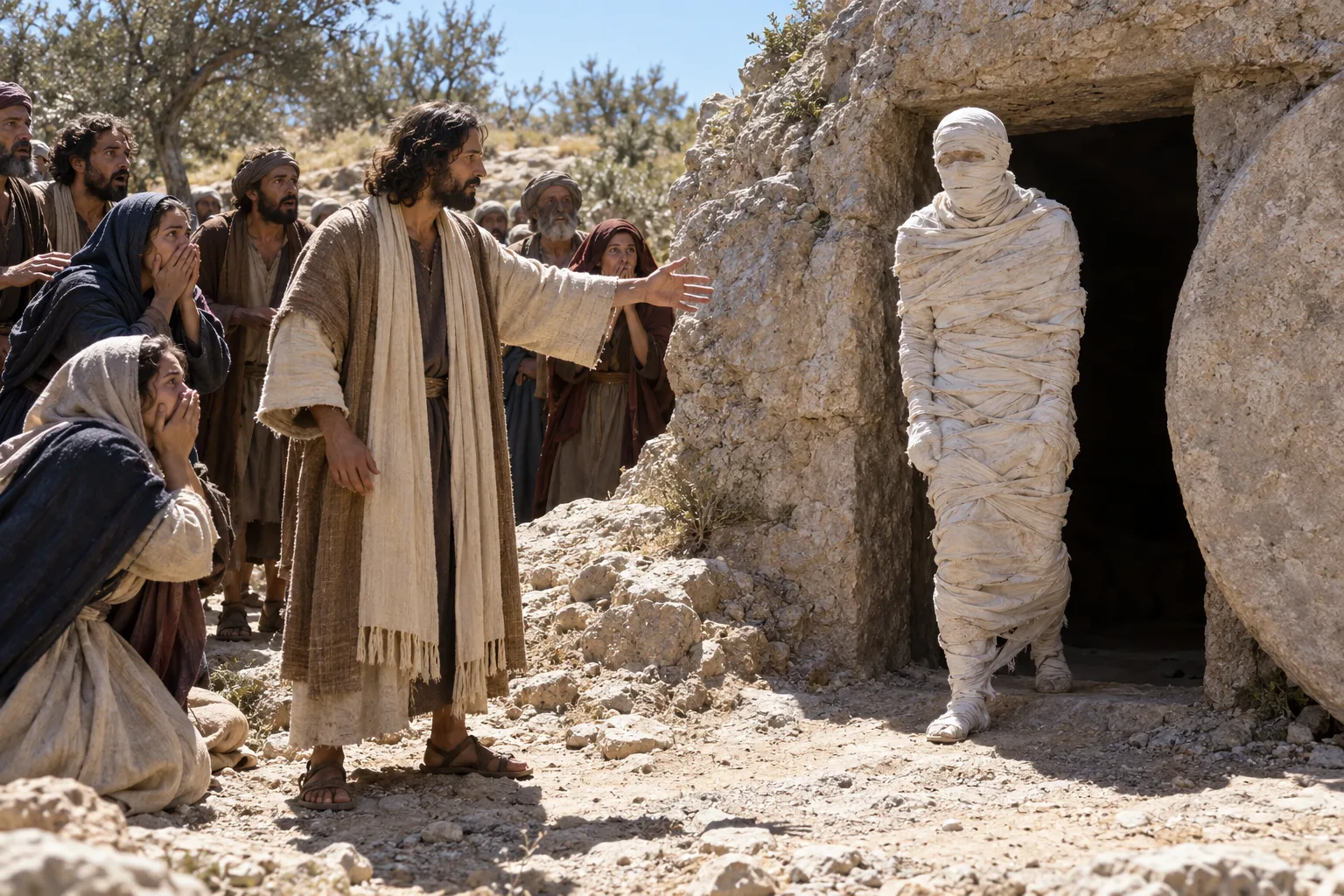
Before His own tomb, Jesus had stood at another. Lazarus had been dead four days, long enough that his sister protested when Jesus asked for the stone to be removed:
"Lord, by this time he stinketh: for he hath been dead four days."John 11:39 KJV
There was no hope left in that grave. And then Jesus cried, "Lazarus, come forth," and the dead man walked out, "bound hand and foot with graveclothes: and his face was bound about with a napkin" (John 11:44). Picture it: a man alive again, but still wrapped in the wrappings of the dead, so bound he could barely move, and Jesus said, "Loose him, and let him go." Lazarus was raised, and it was a staggering miracle. But mark this carefully, because it makes what comes next unforgettable: Lazarus came out still wearing his grave clothes. He had been raised to natural life again, and Scripture gives us no reason to think he would not one day die as other men do.
Where It Lands
The Grave Clothes He Left Behind
Now back to that dark morning and the women with their spices. The stone was rolled away, and the angel said the words that split history in two: "He is not here, but is risen" (Luke 24:6). When Peter and John ran to the tomb and looked in, they did not find a body. They found something that made John believe:
"And seeth the linen clothes lie, and the napkin, that was about his head, not lying with the linen clothes, but wrapped together in a place by itself."John 20:6–7 KJV
There is the difference that changes everything. Lazarus came out bound in his grave clothes, because he would use them again. Jesus left His behind, the linen lying there, the napkin folded by itself, because He would never need them again. He did not merely come back to life to die once more, like Lazarus. He conquered death itself and walked out for good, leaving the wrappings of the grave empty in an empty tomb.
Consider who lay in that tomb. The One who said, "I am the resurrection, and the life" (John 11:25), who told them plainly, "I lay down my life... I have power to lay it down, and I have power to take it again" (John 10:18). The God who breathed life into Adam let Himself be wound in linen and sealed behind a stone, in genuine human flesh, truly dead, and then rose by His own power. This is the heart of the gospel: "Christ died for our sins... he was buried, and... he rose again the third day according to the scriptures" (1 Corinthians 15:3–4). And it becomes ours by identifying with Him, for "we are buried with him by baptism into death: that... even so we also should walk in newness of life" (Romans 6:4).
For You
Your Tomb Will Be Empty Too
The women came expecting to care for a corpse and left as the first witnesses of the resurrection. That is what Jesus does with our worst mornings. He meets us at the grave, at the very place where hope has run out, and rolls the stone away.
If you belong to Him, death is not a wall; it is a door. Because His tomb is empty, yours will be too. The grave clothes could not hold Him, and they will not hold you. So do not grieve as those who have no hope. The Lord of the empty tomb has power to lay down His life and take it again, and He has promised to raise you with Him.
Carry It With You
Memory Verse
John 11:25 KJV
"I am the resurrection, and the life: he that believeth in me, though he were dead, yet shall he live."
For the Historical Notes
References & Sources
Scripture is quoted from the KJV. The burial customs are drawn from the biblical text and standard, well-established sources.
- Burial customs, linen and spices: John 19:38–42; and same-day burial, Deuteronomy 21:23.
- Mourning: Matthew 9:23; Mark 5:38; John 11:31–33.
- Lazarus: John 11:1–44.
- The burial and empty tomb of Jesus: Matthew 27:57–61; Mark 16:1–6; Luke 24:1–8; John 20:1–9.
- The resurrection as the heart of the gospel: 1 Corinthians 15:3–4; John 10:18; 11:25; Romans 6:3–5.
Keep Walking Through Their World
More Life & Times studies are being added. Return to the map and pick your next passage.